2024 · Safety, power, & PID control
Ceramic Kiln Retrofit
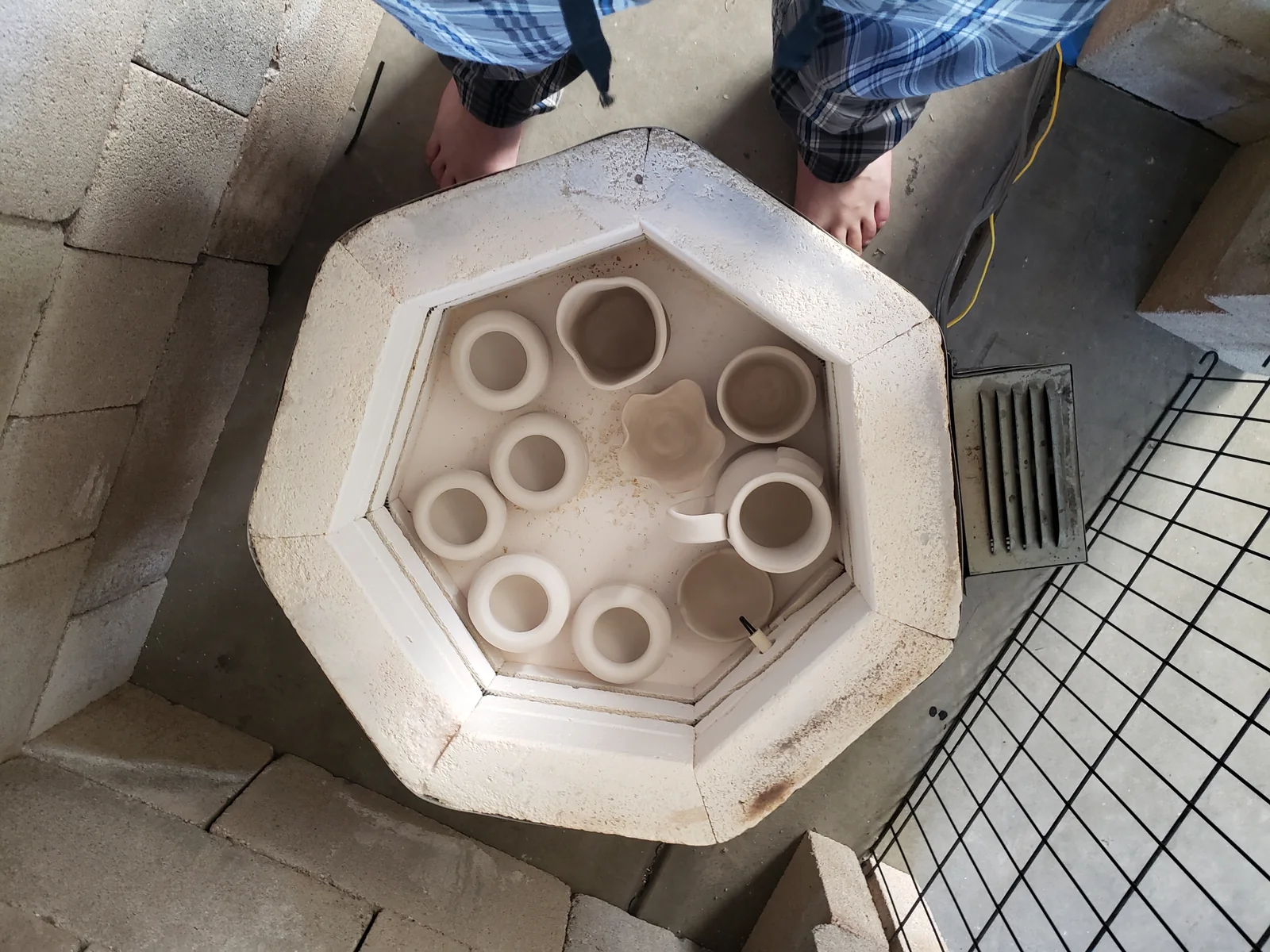
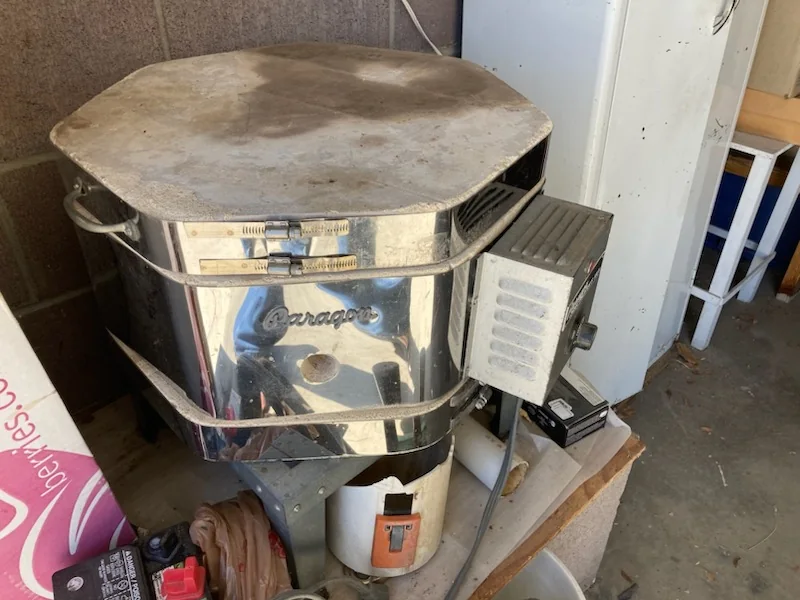
High-school pottery turned into a basement studio. This is my great-grandmother's Paragon china kiln, upgraded from about 1700°F to 2300°F with new elements, a fume hood, and automated firing through a Raspberry Pi PID controller.
Interactive Plant Model
Plant Dynamics & Safety Chain Simulation
A sped-up model of the kiln plant, showing the interlocks and safety features. Simulating real thermodynamic behavior allowing for fault injections to demonstrate the safety layers.
- Thermocouple
- 70 °F
- Setpoint
- -- °F
- GPIO → SSR
- 0%
- Coil power
- 0%
Garage firing plant. Click a hotspot or a node on the energy path — then break a layer.
Power
Sense / command
Hardware
- Replacement coils (custom manufactured to spec): 2500 W, 240 V, channel 102 × 0.5 × 0.5 in, target ~23 Ω, 1300°C application, and surface loading ≤ 15 W/in² for element longevity.
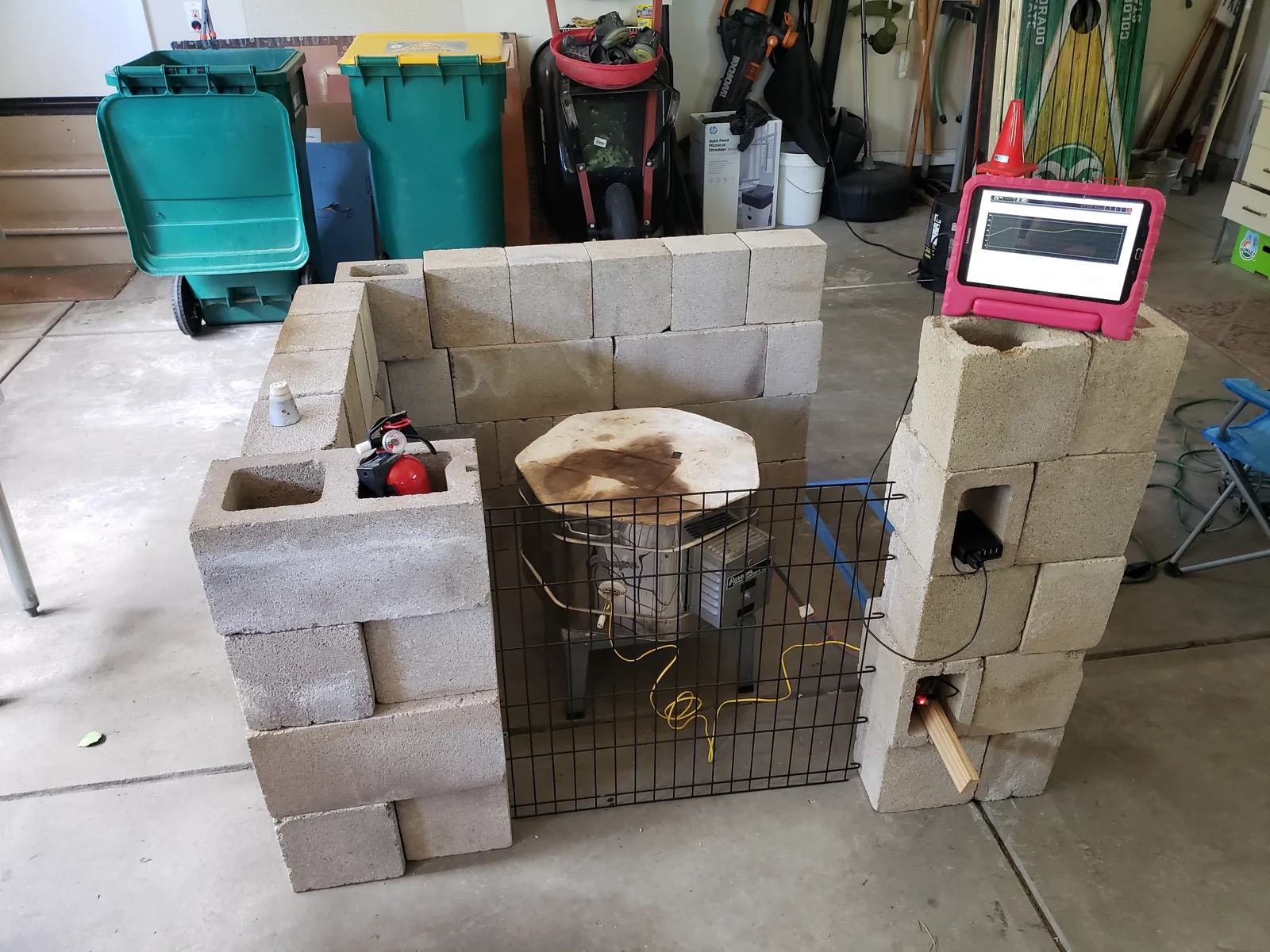
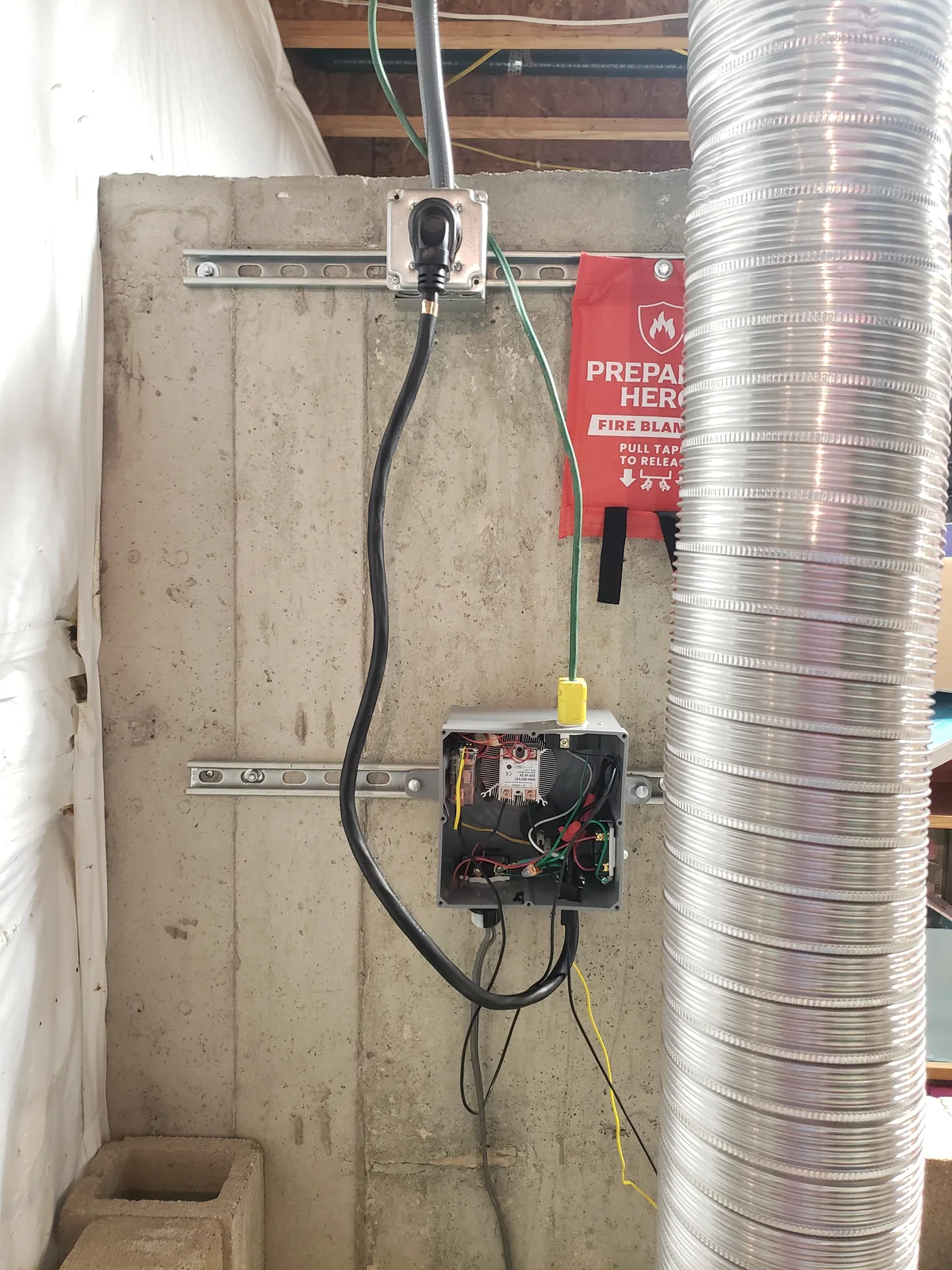
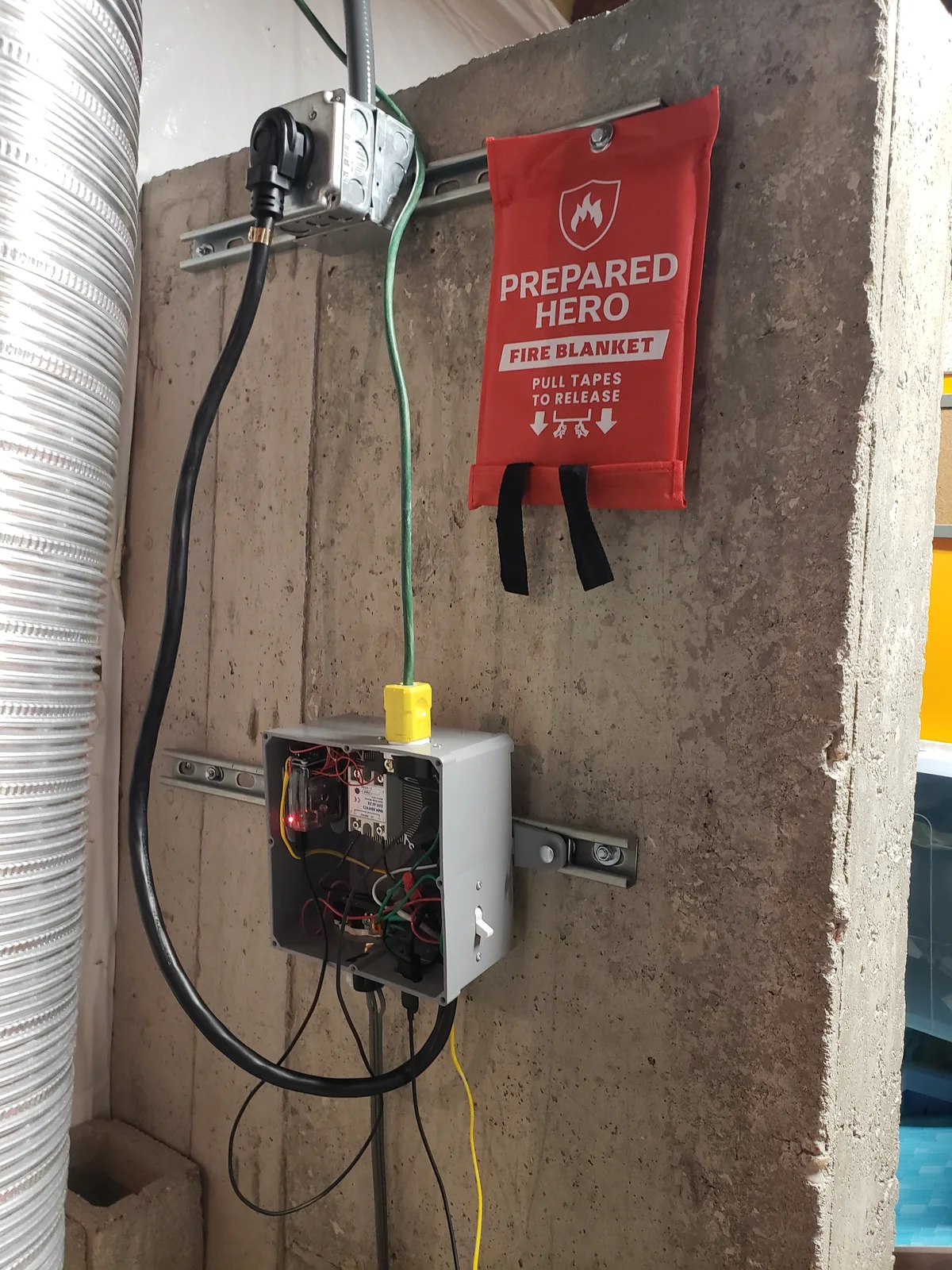
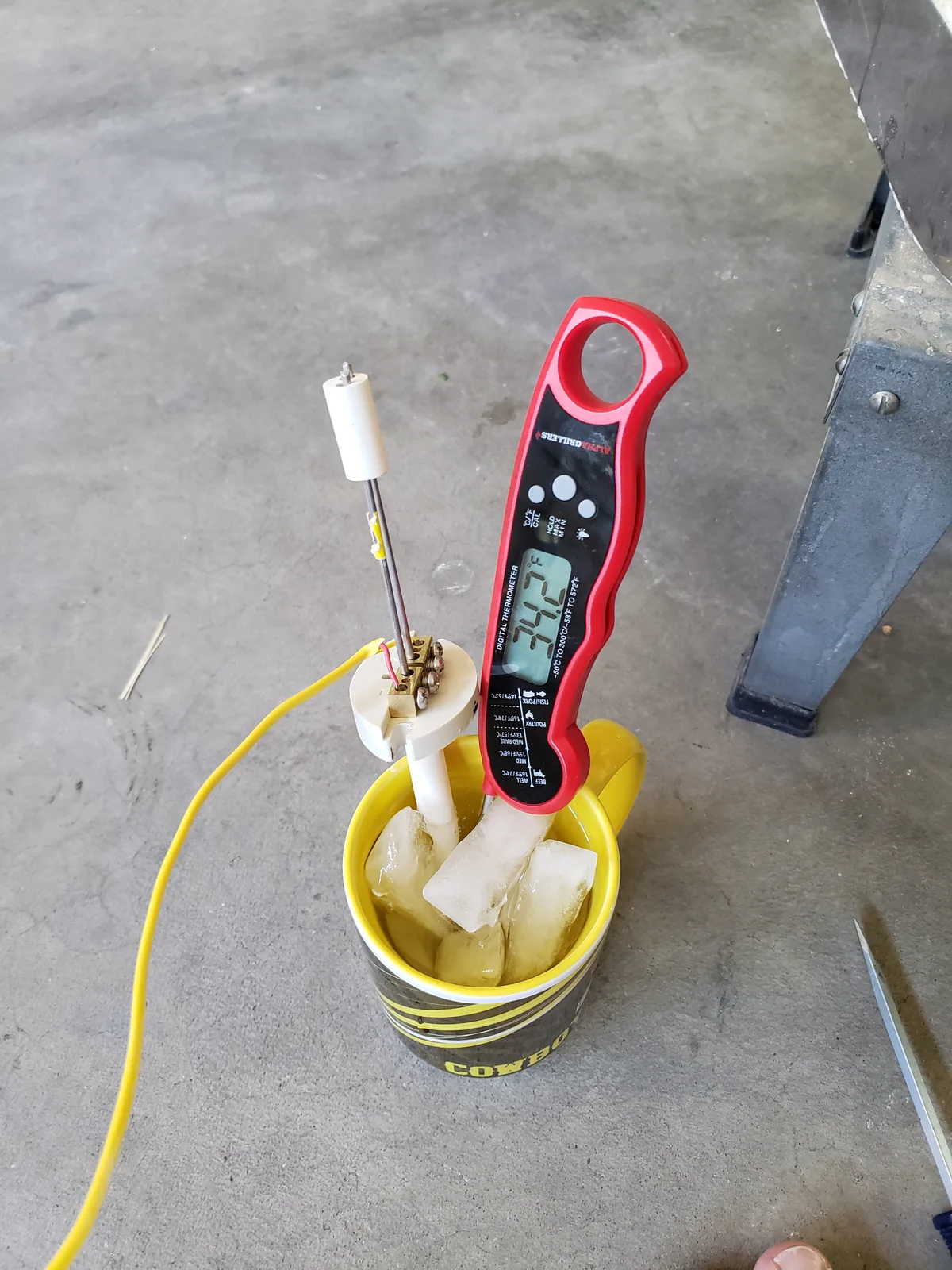
- Sensing & control stack: K-type thermocouple, MAX31855 thermocouple-to-digital converter, Raspberry Pi running kiln-controller with a LAN dashboard tablet, and a heatsink mounted zero-crossing SSR.
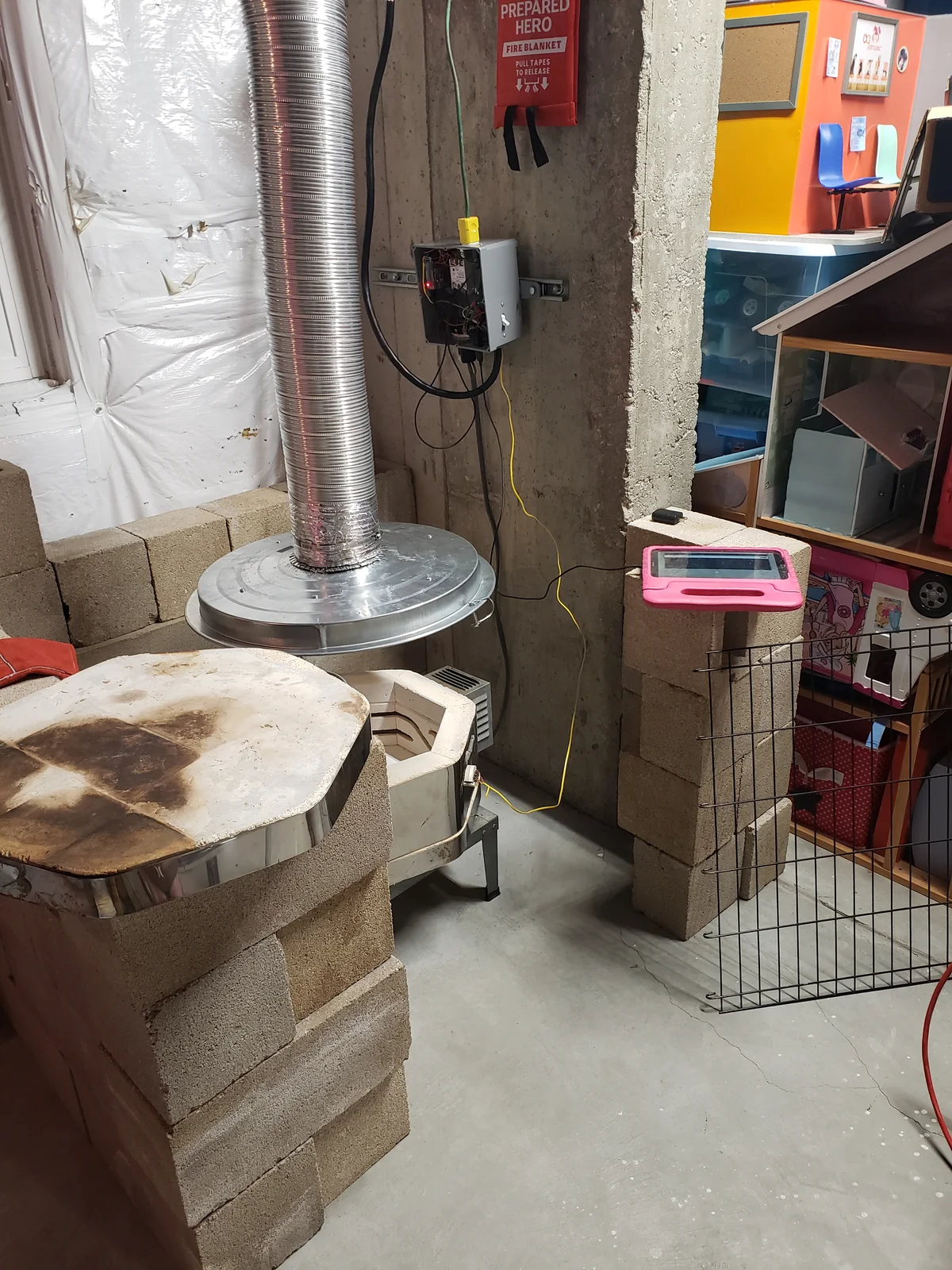
- Ventilation: Fume hood interlocked to the heating element power via a DPDT switch, ensuring elements cannot fire without active ventilation.
- Passive safety & isolation: cinderblock barrier, cement flooring, and a metal gate creating an airgap isolating the kiln.
- Electrical & thermal protection: GFCI breaker for ground faults/leakage and thermal fuses for over-temperature runaways.
Software
This kiln runs jbruce12000/kiln-controller (GPL). This repo also provided wiring schematics for the system controls.
- PID time-proportioning: Drives the zero-crossing SSR via GPIO on a 2-second duty cycle with custom PID tuning derived from an initial autotune test fire.
- Dynamic ramp control: Holds firing schedules automatically if the kiln's heating rate lags by 5°F, ensuring precise thermal profiles.
- Fault detection & recovery: Triggers automated aborts on lost thermocouple signals or runaway temperatures, with state persistence for power outage recovery.
- Local web dashboard: Serves real-time telemetry (actual vs. setpoint temperature, heating rates, and energy cost estimates) over LAN to a dedicated tablet used to start runs and edit firing schedules.
- Remote alerts: Runs a background watcher daemon to monitor temperature deviations and push automated Slack notifications if conditions fall out of spec.
Build Photos
Wiring Schematic
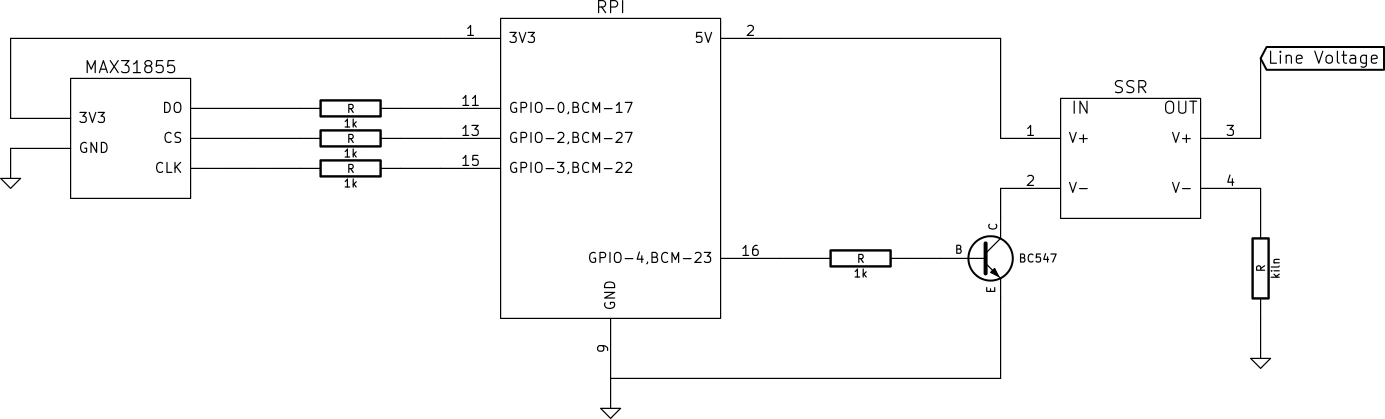
Control wiring from jbruce12000/kiln-controller (GPL).